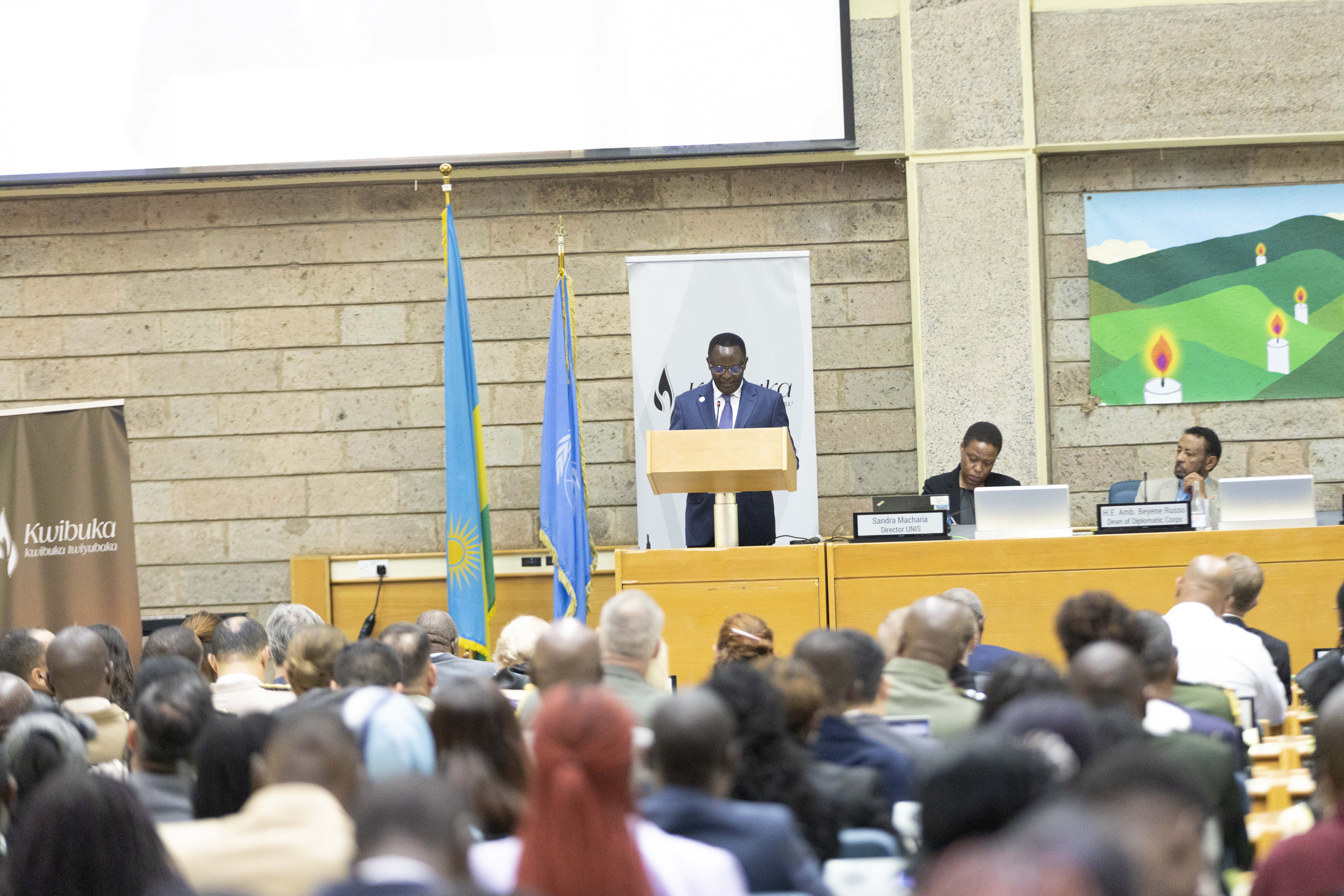
Remarks by High Commissioner Martin Ngoga at the 30th Commemoration of the 1994 Genocide against the Tutsi
First of all, I would like to start by extending my gratitude to everyone in attendance today for sharing this moment of solidarity with Rwandans as we continue to remember more than one million innocent lives that were lost during the 1994 Genocide against the Tutsi, 30 years ago.
This year marks the 30th commemoration of the 1994 Genocide against the Tutsi in Rwanda, under the theme, "Remember-Unite-Renew".
It is a year that has a special meaning as Rwanda celebrates a whole generation since the genocide against the Tutsi was put to an end in July 1994 by the RPF-Inkotanyi. It is very hard to imagine that 30 years ago, this very month, over a million people were being hacked to death; children massacred, women raped, and men mutilated. Just the thought of it brings pain and sadness to the heart. But this is our history, and we must reckon with it.
While 30 years can be perceived as a relatively short period, for Rwandans especially survivors, it represents an extraordinary milestone of survival and resilience. This day is, therefore, both a time to honor the victims, comfort survivors and pay tribute to all those who, in one way or another, played a role in putting an end to the genocide.
Today, we gather here not only to mourn the lives lost during the Tutsi genocide but also to remember, honor, and vow never to forget the atrocities committed against the Tutsi. It is a solemn occasion, one that demands our collective reflection and commitment to ensuring that such horrors are never repeated.
Thirty years ago, the world stood by as unimaginable violence engulfed Rwanda. Innocent men, women, and children were brutally murdered simply because of their ethnicity. It was a dark chapter in human history, a stark reminder of the consequences of hatred, prejudice, and indifference.
As we pay tribute to the victims, we must also acknowledge the resilience of the survivors. Their courage, strength, and determination to rebuild their lives and their communities serve as a beacon of hope in the face of darkness.
In retrospect, let us remember that this commemoration carries a deeper meaning than simply remembering the past. It serves as a powerful reminder that we must confront hatred, discrimination, and division wherever it may arise. Genocide is not an isolated event but a consequence of a society that has allowed prejudice and intolerance to take root. We must ensure that the lessons of the past are never forgotten. We must strive to create a world where diversity is celebrated, where differences are respected, and where all individuals can live free from fear and discrimination.
Although we commemorate the 30th anniversary of the genocide against the Tutsi, we also celebrate 30 years of unity and resilience and a whole new generation of Rwandans aspiring for a future free of hatred, built on the principles of a shared identity (Ndi Umunyarwanda) and committed to fight and prevent the resurgence of any forms of hatred and divisive politics.
However, despite major achievements and milestones in rebuilding Rwanda, among which are unity and reconciliation, justice to survivors, security, good governance, the memory of the 1994 genocide against the Tutsi remains very present through increased manifestations of denial and distortion of the planning and execution of this genocide against the Tutsi.
30 years after, the ideology of hatred and divisionism is resurging in the region and many other parts of the world where authorities and public figures openly call for extermination and massacres targeting particular ethnic groups.
In 1941, in reference to the Holocaust that was underway in Germany, the then British Prime Minister Winston Churchill commented that the world was witnessing a crime without a name. This was in relation to the uniqueness of the brutality and the gravity of the offenses that were being committed against the Jews in Nazi Germany.
Later on Raphael Lemkin put a name to these crimes of such barbarity: Genocide. It was, according to Lemkin, a crime like no other. On the basis of this definition the United Nations would establish attributes to the crime in the Genocide Convention in 1948.
The uniqueness of the crime of genocide is in the intent to uproot a group in part or in whole. Indeed, it is in the inability of those targeted on the basis of their belonging to a particular group to escape death, since the crime they stand accused of is that of being who they are. The crime of being is inescapable.
In fact, the shock that swept Europe at the nature of the atrocity the Jews had faced in Germany led to the collective wisdom at the time that the world should ensure a crime with such attributes should never happen again.
Yet in 1994 a crime fitting those very attributes was allowed to happen. As the genocide against the Tutsi was wreaking havoc, the international community was haggling over what to name what was happening. Nothing was done as had been envisioned through the establishment of the instrument of the Convention 46 years earlier.
On 9th November 1994, the United Nations Security Council in Resolution 955 decided to establish an International Criminal Tribunal for Rwanda to try the perpetrators of genocide and other serious violations of international humanitarian law committed in 1994. In the first judgment of this international court on 2nd September 1998 against a former Bourgmestre, Jean Paul AKAYESU, the Tribunal clearly stated that genocide was committed in Rwanda against the Tutsi population.
This judgement was confirmed by the Appeals Chamber of the ICTR, which, on 16 June 2006, issued a judicial notice to the effect that it was a “fact of common knowledge” that “between 6 April and 17 July 1994, there was a genocide in Rwanda against the Tutsi ethnic group”. This judicial notice settled, once and for all, the legal debate on the qualification of the crime that was committed in Rwanda in 1994.
In a very clear way, in its judgment of 16th December 2006 in the Karemera et al case, the ICTR found that the genocide committed against the Tutsi was a matter of common knowledge, the existence of which is no longer a matter to challenge. It should be noted that this judicial notice was taken after seven years of trials and judgements, which had involved a collection of an enormous body of evidence.
The Court brought humanity closer to the goals of the Convention: clarity that aims to avert recurrence of genocide anywhere in the world. This Judicial Notice constitutes a binding and undisputable judicial finding by an international judicial body which the community of nations is duty bound to respect. It is this tenet of respect to our collective processes through our shared international bodies that anchors our multilateralism.
On the basis of this clarity, on 26 January 2018, the General Assembly of the United Nations adopted a resolution designating the 7th of April of each year as the International Day of Reflection on the Genocide perpetrated against the Tutsi in Rwanda in 1994. There are no crimes without perpetrators and victims. It is therefore important when we talk about the gravity of genocide to state the facts in order to honor the memory of the victims, and also for historical clarity.
Despite this evidence, genocide deniers, including a number of academics, continue to perpetuate negationism by conveniently ignoring the judgements of the International Criminal Tribunal for Rwanda.
Negationism can in no way be accepted as a tolerable opinion or a legitimate right. Genocide denial is a crime. It is for this reason that it must be fought by all means.
Perpetrators and deniers of the Genocide against the Tutsi still continue to move freely in many parts of the world spreading hate ideology and misinformation on the facts surrounding the genocide against the Tutsi on social media and other media platforms. Some of these fugitives have had court judgments rendered against them but continue to be facilitated to evade justice.
This commemoration is therefore a collective plea to members of the international community to ensure the arrest of genocide perpetrators and to deny platforms to the deniers of the genocide against the Tutsi. My government also continues to appeal to the international community to enact laws that criminalize genocide ideology, denial of the Genocide against the Tutsi, hate speech, ideologies of extremism among different groups, as well as marginalization and discrimination of any kind of groups.
The primary obligation to prevent atrocious crimes lies in the hands of individual States. No matter their nationality, genocide perpetrators should be subject to legal structures for penalty. Failing to do so will only make more atrocities likely in future.
In this respect, I would like to encourage decision makers and distinguished members of the academia here present to develop and implement an education curriculum that provides students with in-depth courses on the Genocide against the Tutsi, and to give them appropriate support to understand this phenomenon. It is equally important that other internationally recognized genocides are taught globally, so that the younger generations have sufficient knowledge to understand what happened in the past, with the goal of preventing other atrocities from occurring.
The journey that humanity embarked on in 1941, from a crime without a name to the adoption of the Genocide Convention to the establishment of the International Criminal Tribunal for Rwanda, and its subsequent decisions, are building blocks upon which our collective efforts must be directed. Together, we should not allow a backslide from the present judicial and political clarity to the era of a crime without a name and to a crime with a name for political convenience. The latter, trivializes the gravity of the crime, undercuts solidarity the survivors are due, and makes a mockery of their survival.
Fortunately, and inevitably so, the majority of the international community is marching into the future with the dominant wisdom and clarity on issues. Your presence here today is testament to this collective wisdom.
I thank you.

Rwanda, Kenya commit to strengthening policing cooperation
On March 24, 2026, the Inspector General of Rwanda National Police (RNP), CG Felix Namuhoranye, paid a courtesy call on the Inspector General of…

Rwandans in Kenya celebrate Heroes Day
On 01st February 2026, more than 400 Rwandans living in Kenya, together with friends of Rwanda, gathered at the High Commission to celebrate National…
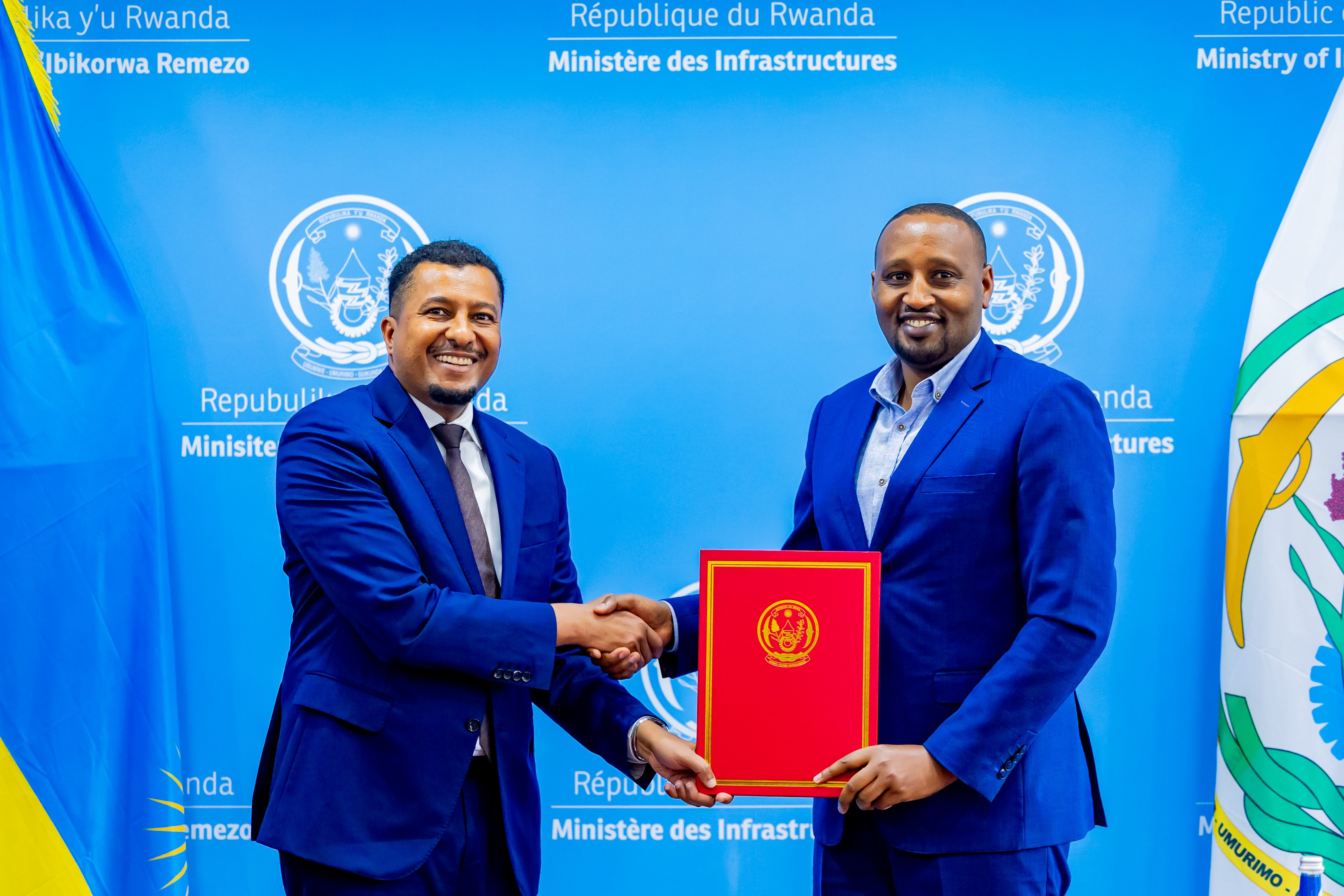
Rwanda, Kenya formalise KPA Kigali office to strengthen regional trade
On January 22, Rwanda and Kenya formalized the signing of a Memorandum of Understanding (MoU) establishing the Kenya Ports Authority (KPA) Liaison…
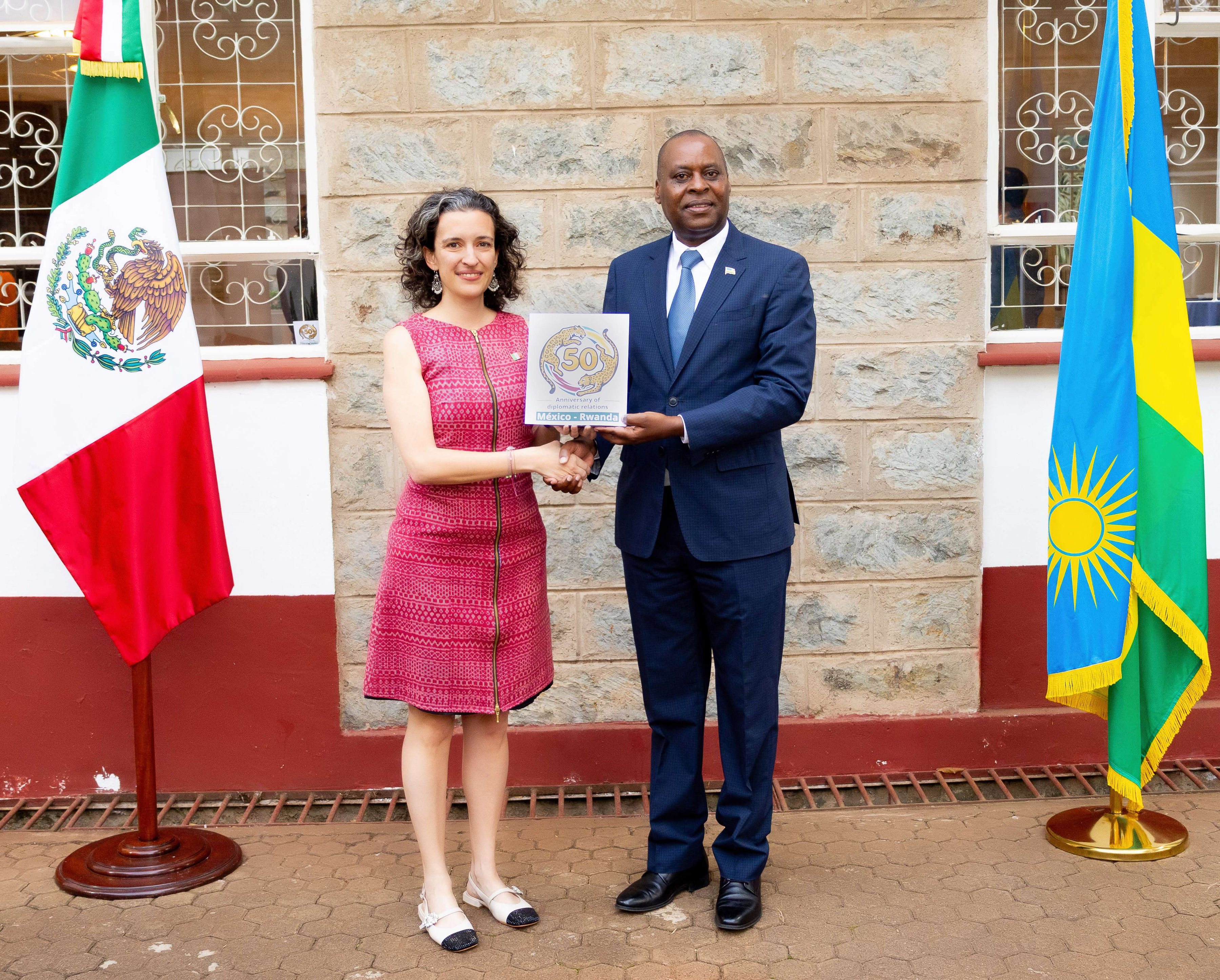
Rwanda, Mexico celebrate 50 years of diplomatic relations
On Wednesday, January 28, Rwanda and Mexico celebrated 50 years of diplomatic relations, highlighting growing cooperation in diplomacy, finance,…

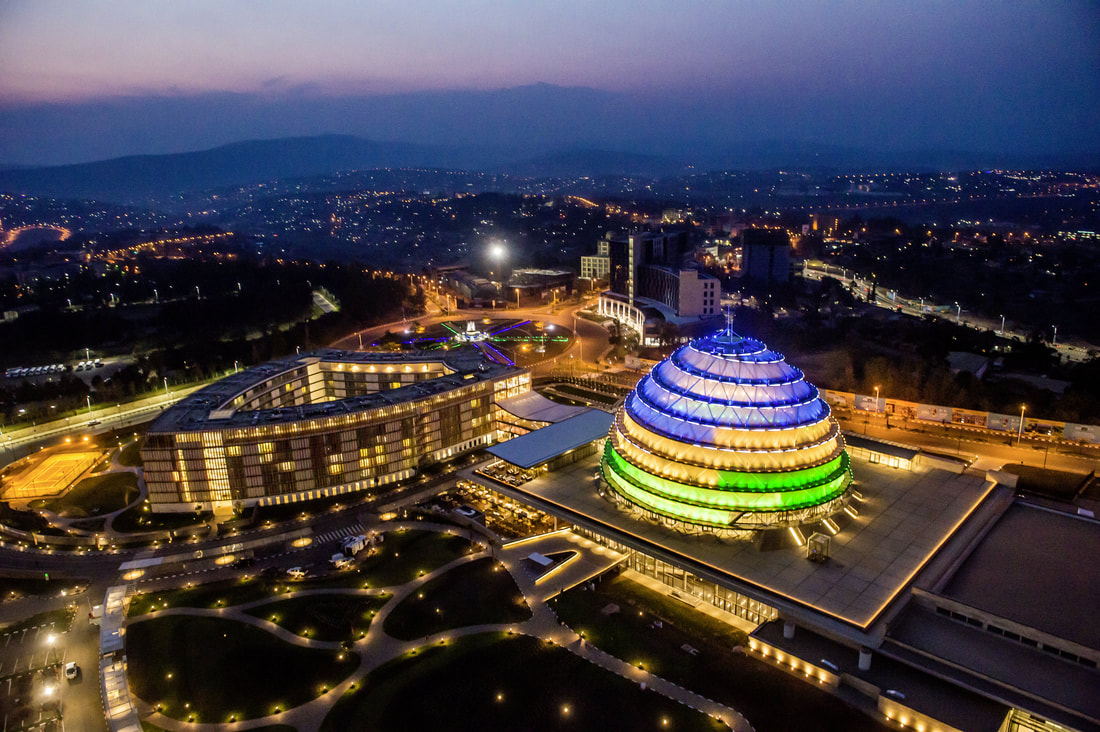
Rwanda's economy registers 11.8% growth in Q3 2025
Rwanda’s economy accelerated in the third quarter of 2025, growing by 11.8%. According to the latest data from the National Institute of Statistics of…

Rwanda tops Africa in World Bank’s 2025 Business Ready Report
Rwanda has once again affirmed its position as Africa’s leading business-friendly economy, according to the World Bank’s Business Ready (B-READY) 2025…

UNEA-7: Rwanda reaffirms commitment to global environmental action
Rwanda has reaffirmed its commitment to global environmental action and multilateral cooperation during the seventh session of the United Nations…